Escuela Montessori y Bilingüe para Educación Infantil, Primaria y Secundaria
1700 NE 132 avenida Portland, Oregón. 97230
503-780-1649
Parkrose Montessori School has opening in our Infant program (3 months to 18 months) and Toddler Program (18 months to 36 months). If you are interesting, contact us!


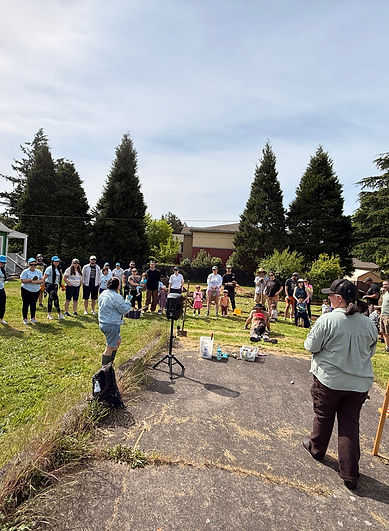
An Outdoor Classroom at Parkrose Montessori School is more than a garden—it is a living environment where children can connect with nature, engage in purposeful work, and discover the joy of learning through real experiences. Whether they are planting vegetables, observing butterflies, harvesting flowers, building with natural materials, or simply listening to birdsong, children develop a deep appreciation for the world around them and their place within it.
As Maria Montessori believed, education should not simply prepare children for life—it should be life itself. An Outdoor Classroom brings this philosophy to life by allowing children to learn with their hands, their minds, and their hearts in the most authentic classroom of all: nature.
Maria Montessori believed that nature is one of the child's greatest teachers. She wrote:
"There must be provision for the child to have contact with nature; to understand and appreciate the order, the harmony, and the beauty in nature."
An Outdoor Classroom provides children with daily opportunities to experience this philosophy firsthand.
Outdoor Classroom
Learning Through Real Experiences
Montessori education emphasizes concrete, hands-on learning rather than abstract instruction. Outdoors, children can plant seeds and observe their growth, care for flowers, vegetables, and herbs, watch insects, birds, and butterflies, explore weather, seasons, and natural cycles, and investigate rocks, leaves, soil, and water.
Independence and Responsibility
An Outdoor Classroom encourages children to become active participants in caring for their environment.
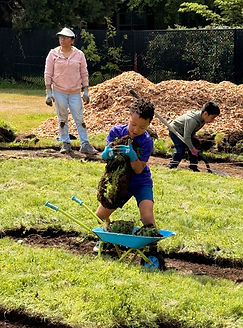
Children learn to water plants, pull weeds, harvest vegetables, clean garden tools, and care for compost.
These practical life activities develop independence, confidence, and responsibility.
Respect for Nature
One of Montessori's most important goals is helping children develop respect for all living things.
Children discover: every plant has a purpose, insects are part of the ecosystem, water should not be wasted, and living things require care and patience.
Sensorial Development
Nature provides endless sensorial experiences.
Children explore: different textures, colors, scents, sounds, temperatures, and shapes.
Unlike plastic materials, nature offers constantly changing sensory experiences that stimulate brain development.
Gross Motor Development
Outdoor environments allow children to climb, balance, dig, carry, push wheelbarrows, build, and walk on uneven surfaces
These activities strengthen muscles, coordination, balance, and confidence.
Scientific Thinking
The garden becomes a living science laboratory.
Children naturally ask: " Why do plants grow? Where do worms live? Why do leaves change color? How does rain help plants?
Rather than memorizing science, they experience it.
Peace and Emotional Regulation
Nature has a calming effect on children.
Outdoor classrooms provide opportunities for quiet observation, mindfulness, reflection, stress reduction and emotional regulation
Many Montessori schools include peaceful garden areas where children can sit, observe, or simply enjoy the sounds of nature.